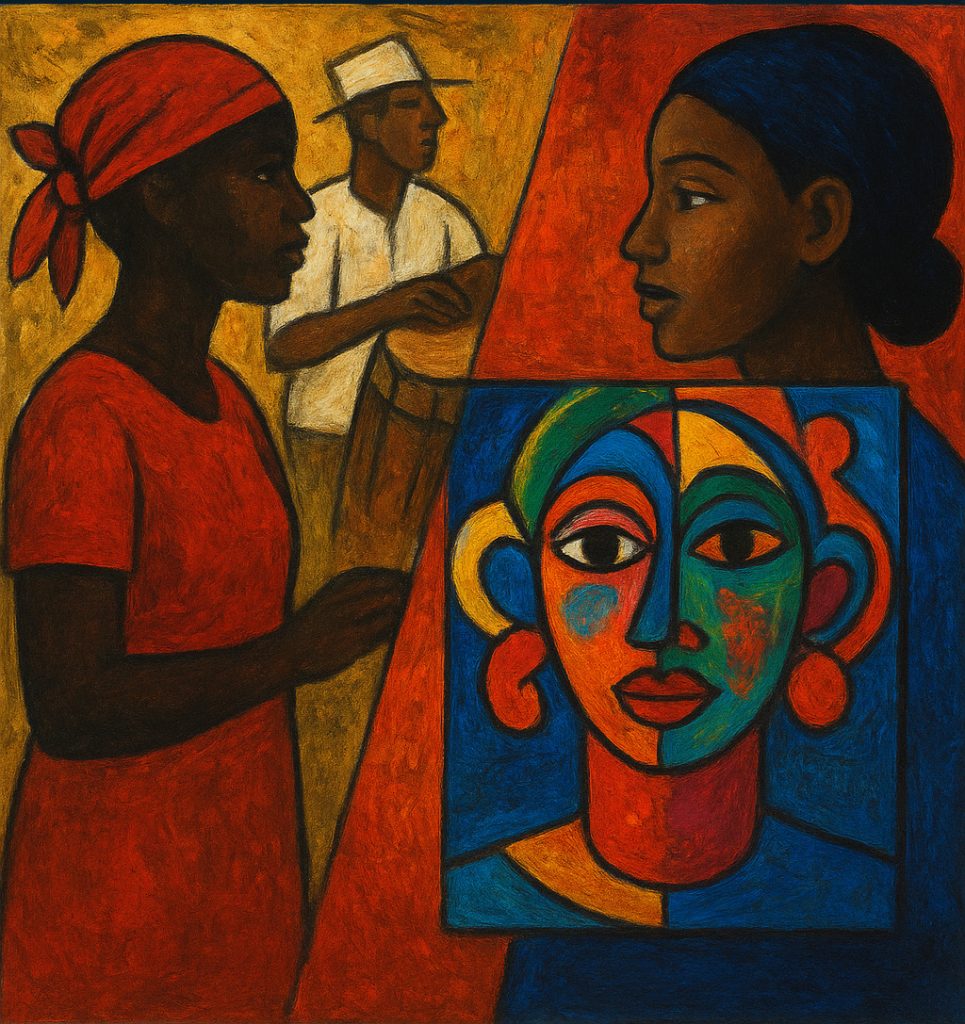
Haitian Art Through the Centuries: Heritage and Modernity
Haitian art is a living heritage, a bridge between the past and the present. It tells a unique story: that of a people who transformed their struggles and beliefs into works of exceptional power and beauty. From the mystical symbolism of Vodou to contemporary expressions, Haitian art is a constant dialogue between tradition and innovation.
Deep roots: Vodou and spirituality
The origins of Haitian art are deeply rooted in Vodou and especially in African traditions. The earliest artists, often anonymous, were initiates who created ritual objects.
Think of richly embroidered Vodou flags decorated with sequins and beads representing the loas (spirits). These are not simple decorations, but sacred works of art filled with meaning and symbolism.
We also find geometric patterns and symbols called veves, drawn on the ground to invoke spirits. This aesthetic laid the foundation of Haitian art, giving it vibrant colors, complex narratives, and a deep connection to the spiritual world.
The painting revolution: Cap-Haïtien School and naïve art
After World War II, Haitian art underwent a major transformation. It was during this period that centers such as the Centre d’Art in Port-au-Prince were established.
Artists like Hector Hyppolite and Philomé Obin became internationally recognized and attracted global attention.
They gave birth to what is often called Haitian naïve art, characterized by bright colors, scenes from everyday life, and meticulous attention to detail. These painters, often self-taught, were not trained in European academies. They drew inspiration from their environment: lively markets, lush landscapes, and of course, Vodou ceremonies.
Haitian naïve art demonstrates that artwork does not need to follow Western standards to be globally recognized. It allows Haitian artists to express themselves authentically and share an intimate vision of their culture.
Modernity: when tradition meets innovation
Today, Haitian art goes far beyond naïve painting. Contemporary artists push boundaries while remaining faithful to their heritage. They integrate new materials and techniques while exploring complex social and political themes.
Metal sculpture, for example, perfectly illustrates this evolution. In Croix-des-Bouquets, artisans transform old oil drums into complex and beautiful works of art. Their creations often depict nature scenes or Vodou figures, made from recycled materials. This transformation powerfully symbolizes Haitian resilience.
Jean Claude Garoute (Tiga) and Édouard Duval-Carrié are two major figures of the contemporary era who, through their talent, opened new paths in the field of art and craftsmanship. Through painting, sculpture, and installations, they explore themes such as diaspora, identity, and memory. Their works are often more abstract or conceptual, but the core themes spirituality, history, and struggle remain ever-present.
These artists do not reject the past; they use it as a stepping stone to create, innovate, and evolve their art. For them, Haitian art can renew itself without losing its values. It honors its roots while embracing the future and continues to tell powerful stories that are deeply Haitian and universal, reminding us that tradition is not a limitation, but a source of inspiration for innovation.