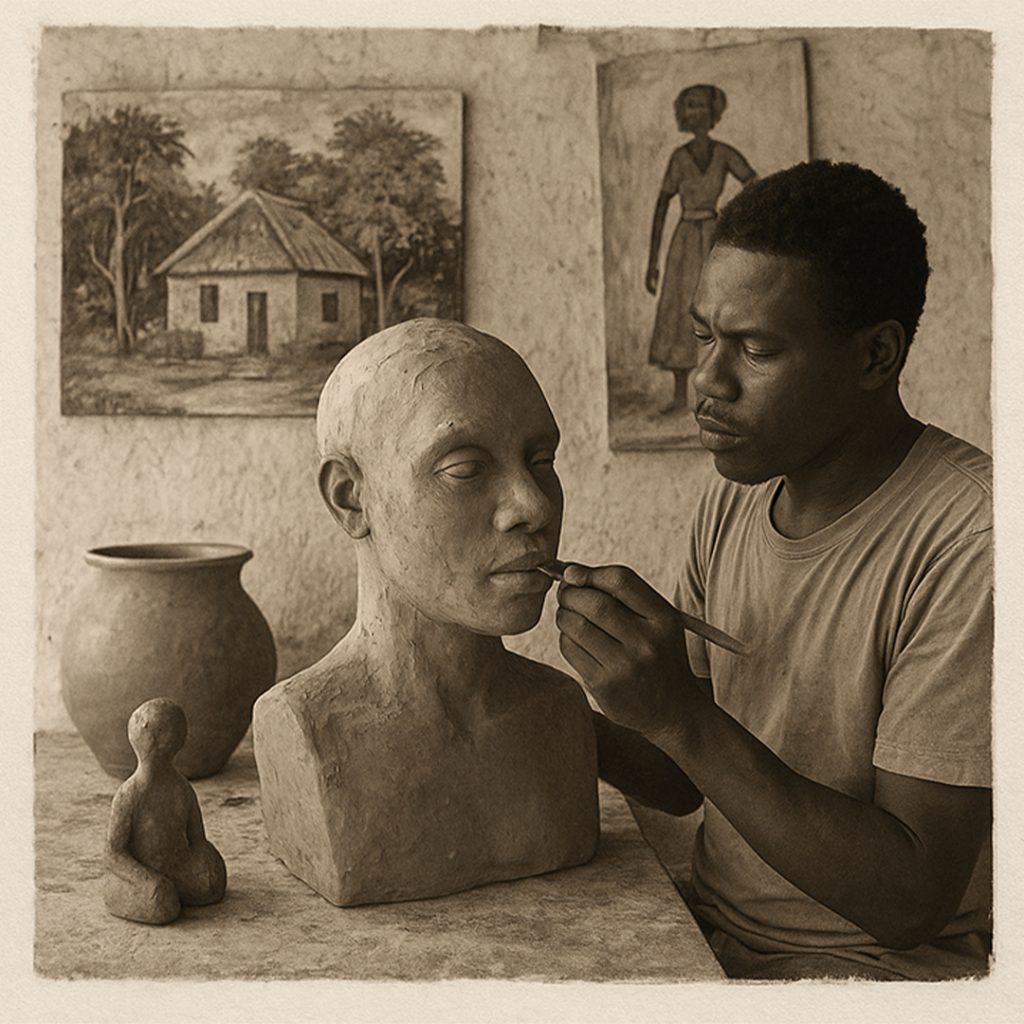
The Craftsmanship in Haiti: Where Passion Meets Challenges
In Haiti, being an artisan is not just a profession it’s a calling, a transmission of ancestral skills passed down through generations. Behind every creation whether a metal sculpture, a sequined painting, or a pottery piece lies a story of passion, resilience, and challenges. Craftsmanship is not merely the production of goods; it is a pillar of cultural identity and a driving force of the local economy. This article explores the daily life of a Haitian artisan, their struggles, and the profound impact of their work.
A Life Devoted to Creation
An artisan’s day begins early. Their workshop might be an open space, a street corner, or a small yard where they work under the Haitian sun. Materials whether repurposed metal drums, driftwood, or fabric are gathered with care, each piece holding unique value. The artisan’s life is guided by constant creativity: the sound of a hammer striking metal, the scrape of a knife carving wood, the quiet conversations with apprentices eager to learn the craft.
For many, craftsmanship is a family affair. Secrets and techniques are passed from father to son or mother to daughter, forging an unbreakable bond between generations. It is an informal education built on patience, precision, and a love for detail.
The Challenges of Creation
Despite their passion, Haitian artisans face numerous obstacles.
Limited access to materials and tools:
Economic instability makes it difficult and expensive to obtain raw materials. Artisans often display remarkable ingenuity, transforming everyday objects into masterpieces. The metal sculptures of Croix-des-Bouquets, crafted from recycled oil drums, are the perfect example.
Marketing difficulties:
The local market is limited, and the sale of handicrafts heavily depends on tourism a sector highly vulnerable to political and economic crises. Many artisans struggle to find stable outlets for their work, resulting in uncertain income.
Unfair competition: The influx of cheap imported goods, often of lower quality, threatens the local market. Haitian craftsmanship the result of meticulous manual labor cannot always compete with mass production prices.
The Social and Economic Impact of Craftsmanship
Despite these challenges, artisans play a vital role in Haitian society.
An economic driver: Handicrafts provide essential income for thousands of families. It is part of the informal economy that sustains a large segment of the population. Purchasing a handmade piece directly supports the survival and growth of entire communities.
A vessel of cultural identity: Every handcrafted piece embodies a fragment of Haiti’s history and soul. Voodoo symbols, rural scenes, and iconic figures convey deep narratives. The artisan acts as a guardian of memory, preserving and passing down an invaluable cultural heritage.
Employment and training: Artisan workshops often serve as training centers for youth, offering learning and employment opportunities where other sectors fall short. Artisans become mentors, passing on not only skills but also values of perseverance and creativity.
Conclusion
Craftsmanship in Haiti is far more than an economic activity. It is an expression of resilience an art form powered by passion and sustained through transmission. Supporting Haitian artisans means more than purchasing a beautiful item; it is a commitment to preserving culture and building a future rooted in creativity and dignity.